
Migration vs Aggregation vs Predation: How to Choose an Ocean Wildlife Expedition
Some wildlife trips feel like a slow, beautiful documentary. Lots of scanning, long stretches of ocean, and then one moment that stays in your head for years.
Other trips feel like a live-action nature show. Fast movement, birds diving, predators charging, and everyone trying to keep up.
Neither is “better.” The problem is when people book one type and expect the other.
A simple framework helps you choose trips more intelligently and judge them more ethically. Most big wildlife encounters fall into one of three patterns:
Migration
Aggregation
Predation
Once you know which pattern a trip is built around, your expectations get sharper, your planning gets easier, and your experience improves.
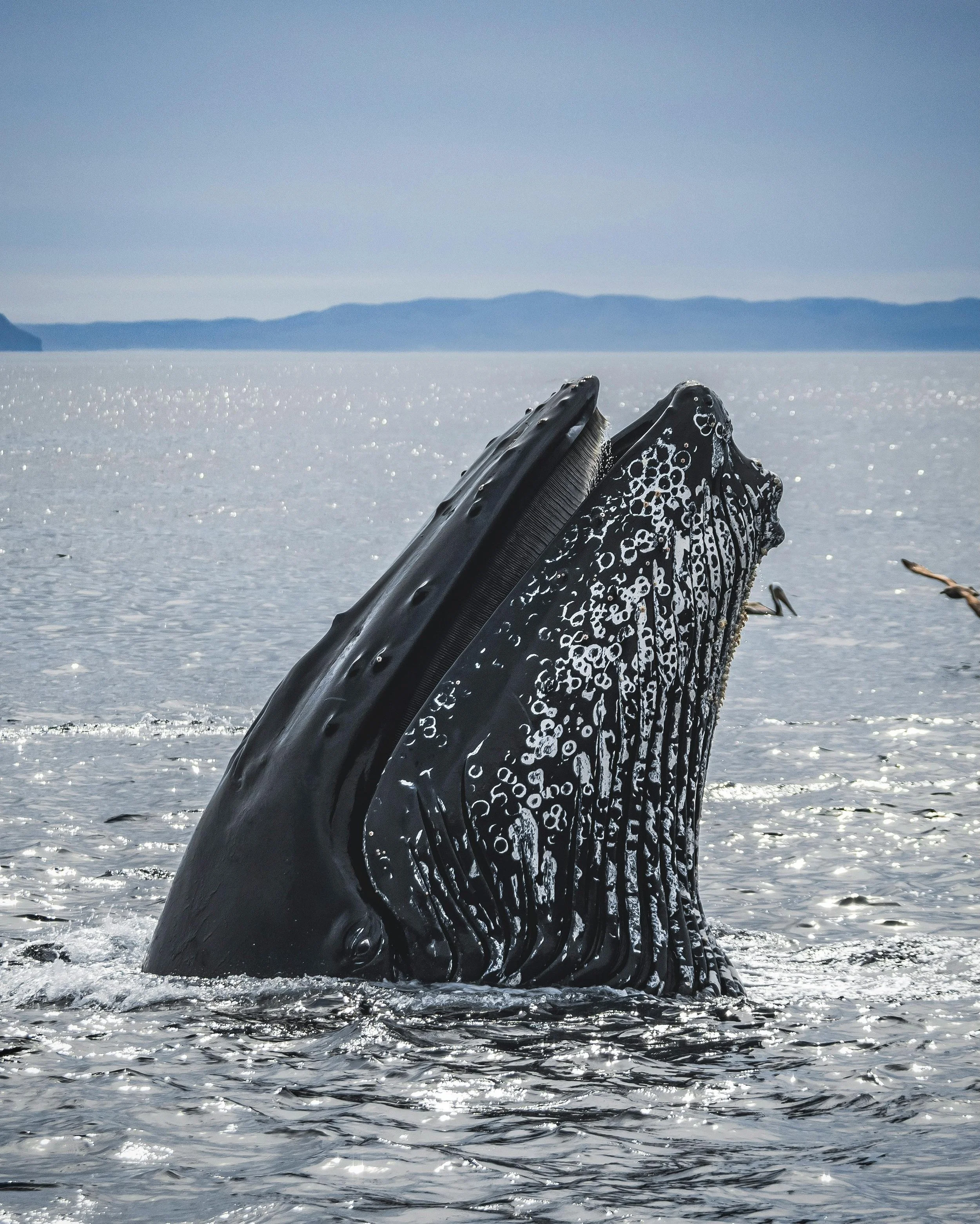
Migration: when wildlife is on the move
Migration is the movement between regions. Animals travel seasonally for breeding, feeding, or better conditions.
What migration often looks like on the water:
More searching time
Encounters that can be brief but intense
Animals moving with purpose, often in a clear direction
A lot of “quiet” time that is actually part of the expedition rhythm
Why people misread migration trips
Many travelers expect nonstop action because the marketing around wildlife travel can be dramatic. In reality, migration is not a performance. The magic often lies in the scale of the journey and the privilege of being there at the right time.
What a good migration expedition feels like
A good migration trip feels like:
You are tracking something real
You are reading conditions and adapting
You are seeing animals on their own schedule
Examples of migration style encounters
Migration can include whales traveling through corridors, turtles moving between feeding and nesting areas, or seasonal shifts in bird life over productive waters.
Aggregation: when wildlife concentrates in one place
Aggregation is concentration. Animals gather in a specific area because conditions are consistently favorable.
Common reasons for aggregation:
Food availability in a predictable place
Cleaning stations where animals return repeatedly
Shelter and nursery habitats
Breeding or social behavior in a defined region
What aggregation often looks like on the water:
Higher chance of repeat encounters in the same area
More time observing behavior without rushing
Days that can feel more predictable than migration trips
Why do people love aggregation trips
Aggregation sites can feel “reliable.” You are not chasing a moving target as much. If you are new to wildlife travel, aggregation-focused trips can be a great entry point because you have more time to observe and learn.
The ethical risk with aggregation
Because aggregation sites can be consistent, they can also become crowded. Pressure builds when too many boats or swimmers crowd into a small area. Responsible operators manage spacing, timing, and group behavior with discipline.
If you are booking an aggregation-style trip, ask about:
Group size and rotation systems
Distance rules and time limits
What they do when other boats crowd in
Whether they will stop an interaction if pressure increases
Predation: when feeding drives the action
Predation is a feeding behavior. This is where many of the “wildlife spectacle” moments come from.
Predation can look like:
Predators hunting schooling fish
Seabirds diving on bait balls
Fast, shifting movement across the surface
A sudden change from calm to chaos in minutes
What predation often feels like on a trip:
The most adrenaline and intensity
Rapid decision-making and changing conditions
Incredible opportunities for photographers
Higher chance of missing the moment if you are not ready
Why predation gets overhyped
Predation events can be spectacular, but they are not guaranteed. They can also be short-lived. If someone is promising constant feeding chaos, that is a red flag.
The ethical line with predation
Predation is also where people are most tempted to push. Chasing feeding animals, cutting off travel lines, or crowding a hunt can add pressure to both predator and prey.
A useful principle:
Seeing feeding is not automatically a success if it requires harassment or crowding.
How to choose the right trip for your personality
Here is a quick decision guide.
Choose migration-style trips if you:
Enjoy expedition rhythm and patience
Want the feeling of tracking something wild and seasonal
Can handle long scanning periods without frustration
Measure success by quality, not quantity
Choose aggregation-style trips if you:
Want more consistent encounter probability
Prefer longer observation windows
Want time to learn behavior and improve skills over several days
Value calmer experiences with more predictability
Choose predation-style trips if you:
Want high-energy wildlife moments
Are comfortable with fast conditions and quick decisions
Are traveling for photography or filming, and can react quickly
Understand that “spectacle” is never guaranteed
The questions to ask any operator before you book
These questions are simple, but they reveal everything.
Is this trip built around migration, aggregation, or predation?
What does a “good day” look like in real terms?
How much time searching
How much time observing
How much time in the water, if relevant
How do you manage distance, group size, and time limits?
What conditions change the plan?
Wind, swell, visibility
Animal behavior
Crowding from other boats
What does “responsible interaction” mean to you in practice?
If the answers are vague, that is information.
How does this tie to ethical wildlife travel
This framework is not just about expectations. It is about pressure.
Different patterns create different risks:
Migration corridors can tempt people to chase moving animals
Aggregation sites can become crowded and stressful
Predation events can push people into aggressive positioning
A responsible approach is consistent across all three:
Calm, predictable movements
Respectful distance
No chasing
No cutting off paths
Willingness to stop when animals or conditions signal stress
In other words, the best encounters are those where the animals remain in control.
If you want to explore expedition options
If you want to see how this framework applies to real expeditions, start here:
If you are interested in migration corridor style encounters specifically, you can also explore:
Final thought
A wildlife trip should not feel like gambling. You cannot control wild animals, but you can choose the right pattern and the right operator.
When your expectations match the reality of the experience, you enjoy more, learn more, and travel in a way that respects the ocean and the animals that live in it.
